
Indigenous Trade Networks Before European Contact
Blog post description.
12/31/20251 min read
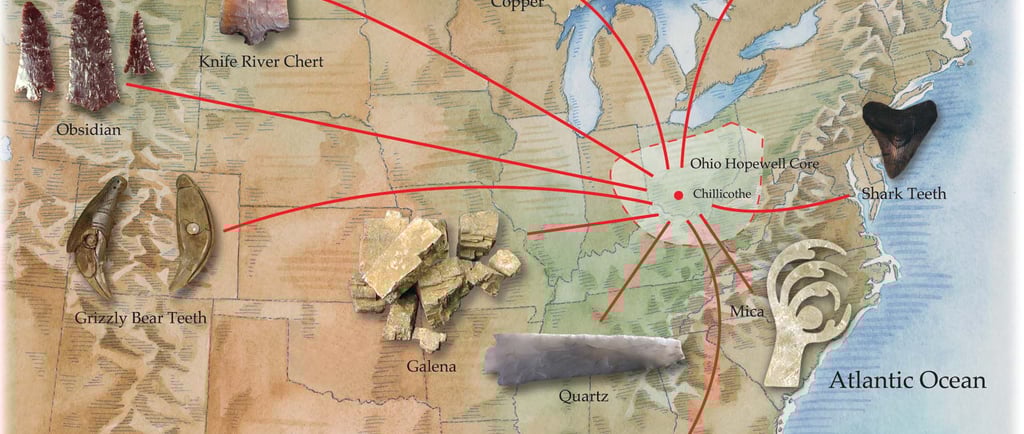
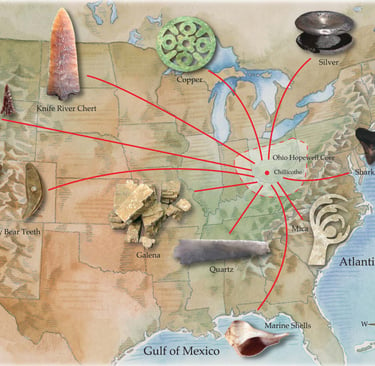
Indigenous Trade Networks Pre-Dating European Contact
Long before European ships reached the shores of North America, Indigenous nations maintained vast, organized trade networks that connected the continent from the Great Lakes to the Gulf of Mexico. These networks were not incidental or occasional; they were stable economic systems that moved raw materials, finished goods, ceremonial objects, and cultural knowledge across thousands of miles.
Archaeological evidence makes this clear. Copper mined in the Great Lakes region—particularly around Lake Superior—has been found in burial sites and ceremonial contexts as far south as present-day Alabama. Likewise, marine shells from the Gulf Coast appear in Ohio Valley mound complexes, crafted into gorgets, beads, and ritual objects. These materials could only have traveled such distances through established trade routes managed by Indigenous nations.
Research associated with Smithsonian Institution and Cahokia Mounds confirms that Mississippian and earlier cultures operated continent-scale exchange systems centuries before European contact. River systems like the Mississippi, Ohio, and Tennessee functioned as trade highways, not barriers.
Why was this hidden?
Early historians often portrayed Indigenous societies as isolated or technologically simple to justify colonization and land seizure. Acknowledging sophisticated trade economies would have undermined those narratives.
Today, university archaeology programs—including publications from the University of Alabama—continue to verify what the land has always shown: Indigenous North America was economically advanced, interconnected, and globally significant long before Europe arrived.